
GS PAPER – I & III
Pulses Production India
Why in news?
In a written reply submitted to the Rajya Sabha recently, the Union Minister of Agriculture and Farmers Welfare offered insightful commentary on the many techniques being used to increase the production of pulses in India.
The Department of Agriculture & Farmers Welfare is in charge of the NFSM-Pulses initiative, which is active in 28 States and 2 Union Territories, including Jammu & Kashmir and Ladakh.
India’s Pulses Production
- India is the largest producer (25% of global production), consumer (27% of world consumption) and importer (14%) of pulses in the world.
- Pulses account for around 20% of the area under foodgrains and contribute around 7-10% of the total foodgrains production in the country.
- Though pulses are grown in both Kharif and Rabi seasons, Rabi pulses contribute more than 60% of the total production.
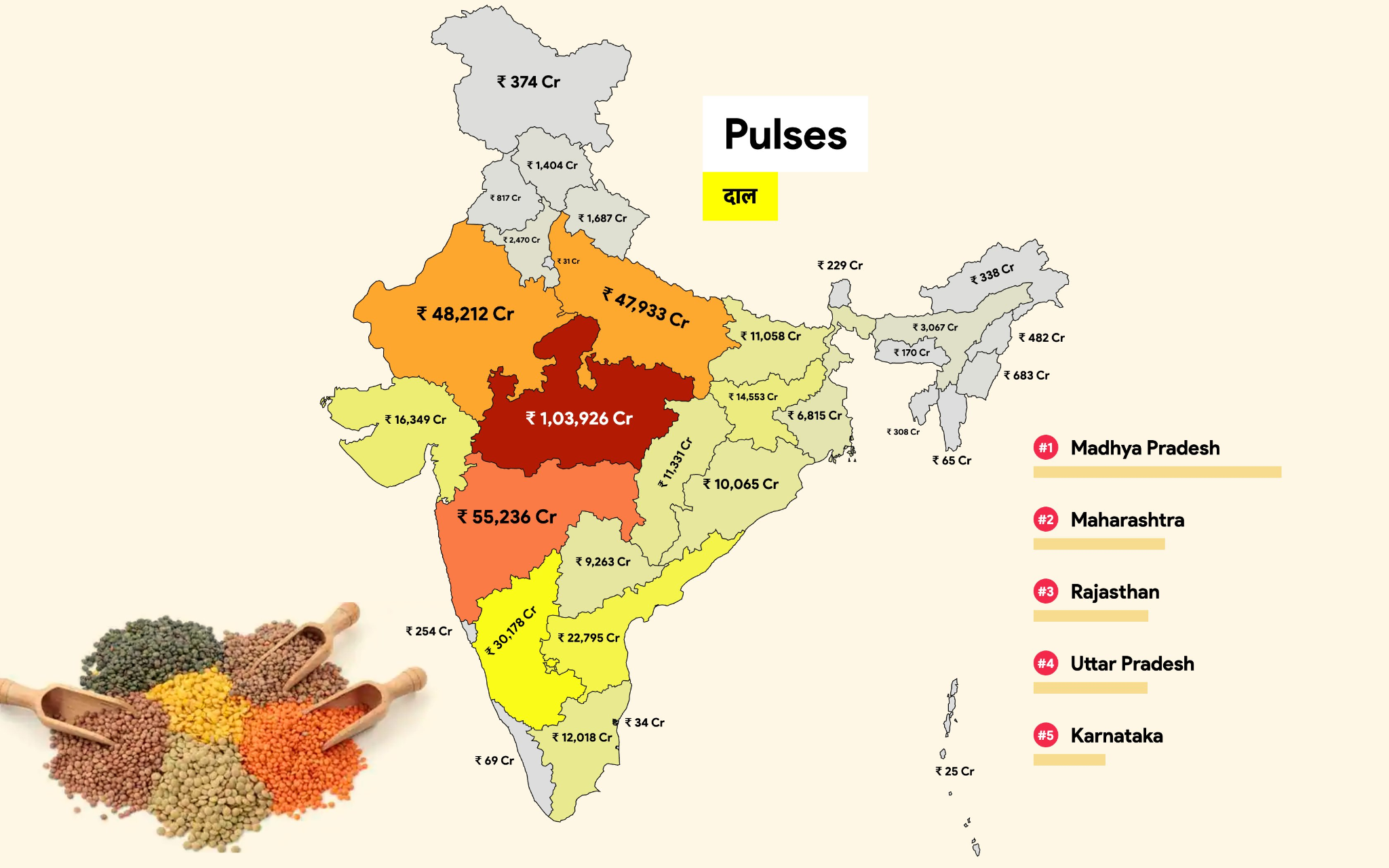
- Madhya Pradesh, Maharashtra, Rajasthan, Uttar Pradesh and Karnataka are the top five pulses-producing states.
Issues with Pulse Production:
- Low productivity due to rain-fed cultivation, pests and diseases, and lack of high-yielding varieties.
- Uncertain market prices and lack of assured demand.
- High cost of cultivation and low returns to farmers.
- Lack of infrastructure and credit facilities for farmers.
Government Policies:
- The lack of a comprehensive pulse policy.
- The low minimum support price (MSP) for pulses.
- The high import duty on pulses.
- The lack of infrastructure for pulse storage and processing.
- The lack of marketing support for pulses.
Efforts:
- National Food Security Mission (NFSM)-Pulses: Department of Agriculture & Farmers Welfare,
- ICAR’s Role in Research and Variety Development to enhance the productivity potential of pulse crops through research and development efforts.
- Pradhan Mantri Annadata Aay SanraksHan Abhiyan (PM-AASHA) Scheme
- Price Support Scheme (PSS): Procurement from pre-registered farmers at Minimum Support Price (MSP).
- Price Deficiency Payment Scheme (PDPS): Compensates farmers for price differences.
- Private Procurement Stockist Scheme (PPSS): Encourages private sector participation in procurement.
Way Forward
- Increase productivity through high-yielding varieties, improved practices, and irrigation.
- Diversify crops to reduce risk of pests and diseases.
- Provide government support through subsidies, crop insurance, and marketing assistance.
- Improve infrastructure for storage and processing.
- Promote pulses consumption through awareness and affordability.
By addressing these challenges, India can become self-sufficient in pulses production and improve the nutrition of its people.
GS PAPER – I & II
‘Koosina Mane’ Initiative
Why in news?
Recently, Karnataka has introduced the “Koosina Mane” programme, which was included in its budget for 2023–24.
- It represents a positive step towards boosting women’s labour force participation and tackling gender inequities.
- CHILD CARE CENTRES: In order to assist working moms who are beneficiaries of the MGNREGA and other neighbouring programmes, this initiative seeks to create childcare centres in 4,000 gramme panchayats.
- TRIPLE BURDEN: It addresses the “triple burden” of childcare obligations, working and upgrading their skills.
- Motherhood Penalty: The “motherhood penalty,” which is regarded as one of the causes of women leaving the workforce, is also focused.
GS PAPER – III
Amyotrophic Lateral Sclerosis (ALS)
Why in news?
Recently, the support groups for patients with Amyotrophic Lateral Sclerosis (ALS) have urged that the condition be counted as a rare disease, which they hope will ease eligibility for financial assistance.
What is Amyotrophic Lateral Sclerosis (ALS)?
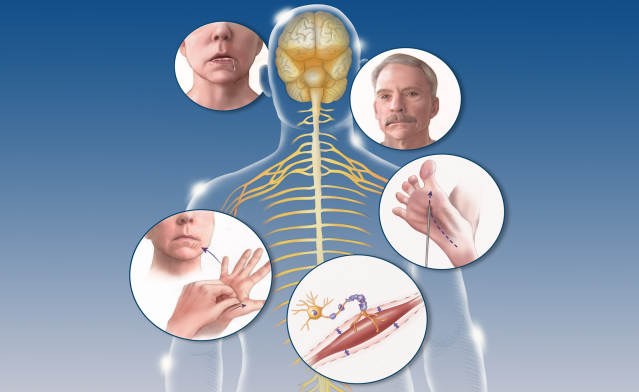
- Amyotrophic lateral sclerosis (ALS), also known as Lou Gehrig’s disease, is a progressive neurodegenerative disease that affects nerve cells in the brain and spinal cord. Motor neurons are the nerve cells that control voluntary muscle movement. In ALS, these motor neurons degenerate and die, which leads to muscle weakness and wasting.
- It is a rare disease, affecting about 5 in 100,000 people.
- It can affect people of all ages, but it is most common in people between the ages of 40 and 60.
- There is no known cure for ALS, but there are treatments that can help to manage the symptoms.
- The average life expectancy for people with ALS is 3-5 years, but some people can live for longer
What is a rare disease?
- A rare disease is a disease that affects a small percentage of the population. Less than 5% of the 6,000–8,000 rare diseases that have been designated as such have treatments.
- Lysosomal Storage Disorders (LSD), Pompe disease, cystic fibrosis, muscular dystrophy, spina bifida, haemophilia, etc. are a few examples.
National Rare Disease Policy 2021:
 The National Policy for Rare Diseases 2021 (NPRD) is a policy document of the Government of India that aims to improve the diagnosis, treatment, and care of rare diseases in the country.
- The policy defines rare diseases as those that affect fewer than 1 in 2000 people.
- The policy defines rare diseases as those that affect fewer than 1 in 2000 people.
- The policy provides for financial assistance to patients with rare diseases, up to Rs. 20 lakh for treatment of those that require a one-time treatment.
- The policy also provides for financial assistance for research into rare diseases.
- The policy sets up a national registry of rare diseases.
- The policy also provides for the establishment of eight Centres of Excellence for Rare Diseases.
WATER LEVELS FALL TO HISTORIC LOWS IN LAKE TITICACA
Why in news?
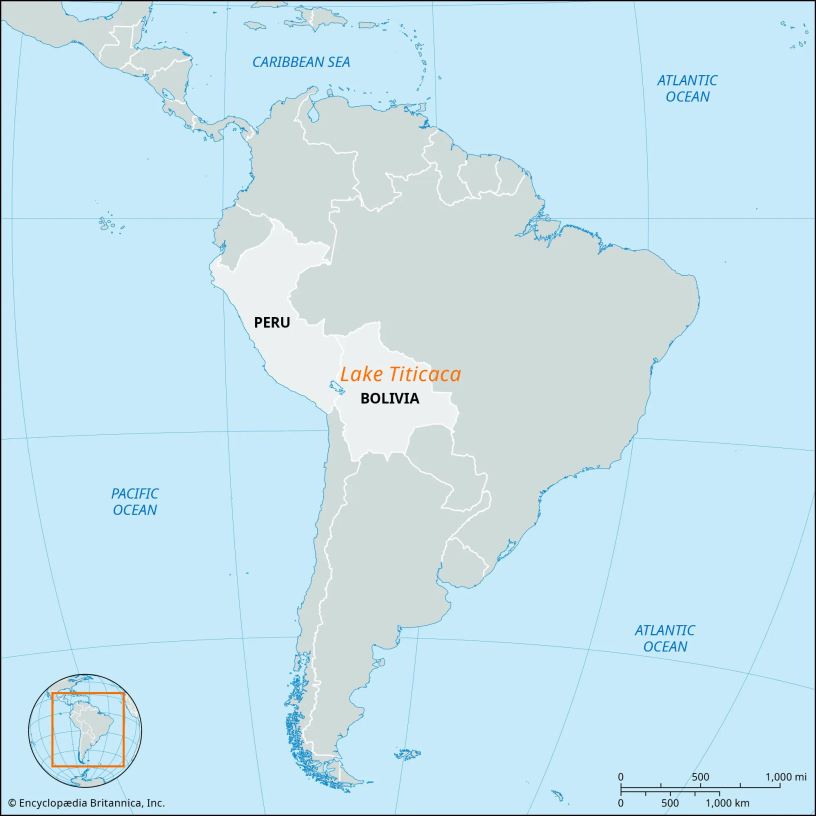 The lake has seen water levels fall dramatically owing to climate change. The waters of Lake Titicaca are within 25 cm of their all-time low, a record set in 1996. Low water levels mean fish that ordinarily spawn near shore are now unable to.
About Lake Titicaca
- Lake Titicaca, is a massive body of water at a breath-sapping altitude in the Andes on the border between Bolivia and Peru.
- Lake Titicaca is the highest of the world’s large lakes and largest in South America after Venezuela’s Lake Maracaibo, which is connected to the Caribbean Sea, and Brazil’s Lagoa dos Patos, a coastal lagoon.
- Titicaca is one of less than twenty ancient lakes on earth and is thought to be there million years old.
- It holds large populations of water birds and was designated as a Ramsar Site in, 1998.
Role of Climate Change
- The falling water levels are “the result of climate change” and the outlook is not good.
- It is very probable that they keep falling until they hit even lower levels.
- The level of Lake Titicaca has been progressively decreasing due to many meteorological, hydrological and climatic factors.
- The rainfall and the inflow to the lake from Peruvian rivers were not sufficient to generate the normal rises in times of rain.
- The lake is heavily polluted by waste from the city of El Alto, a metropolis of one million people in the landlocked country.
- Additionally, indiscriminate fishing has decimated species.
- The recent summit in Brazil of the Amazon Cooperation Treaty Organization reaffirmed the call for industrialised countries to fulfil their promises of economic resources to finance actions against climate change.
GS PAPER – III
GUJARAT DECLARATION: TO BOOST TRADITIONAL MEDICINE
Why in news?
- Speaking at the WHO’s first global summit on traditional medicine as part of the G-20 Health Ministers’ meeting in Gandhinagar, Tedros Adhanom Ghebreyesus, Director-General of the World Health Organization (WHO), urged countries to work towards unlocking the power of traditional medicine and provide evidence and action-based suggestions that could be interpreted into a global strategy.
About Gujarat Declaration
- The Gujarat Declaration, is the outcome of the first global summit on traditional medicines, it will serve as a catalyst to harness the potential of traditional medicine through the lens of science.
- Dr Ghebreyesus praised India’s rich tradition of traditional medicine, including ayurveda and yoga, as effective tools in pain relief.
Highlights of the Summit
- The main outcome of this summit, will focus on the integration of traditional medicines in national health systems and help unlock the power of traditional medicine through science.
- WHO Global Centre for Traditional Medicine is also being built in Jamnagar.
- One of the great strengths of traditional medicine is the understanding of links between the health of humans and our environment.
- Hence, WHO is committed to unlocking the potential of traditional medicines through the centre.
- Exploring traditional medicines can synergize ancient wisdom with modern science, aligned with India’s “One Earth, One Family, One Future” goal of its G20 presidency.
- Outcomes of the WHO Traditional Medicine Global Summit will pave the way for a dedicated forum within future G20 presidencies.
- Participants highlighted the increased use of traditional medicines, particularly in countries like India, following the Covid pandemic.
- Experts called for comprehensive research, rigorous documentation, and scientific methodologies to substantiate efficacy claims in traditional medicine.
GS PAPER – III
FLOOD FORECAST APP LAUNCHED BY WATER COMMISSION
Why in news?
- The Central Water Commission launched an app, called ‘Floodwatch’.
About the Floodwatch App
- Floodwatch can forecast the chances of floods a day in advance.
- It also provides a seven-day advisory on the chances of floods at various stations in the country where the CWC maintains its measurement gauges.
- Available on Google’s Play Store, the app has a map of India with coloured circles at water stations across the country indicating the current risk of flooding.
- A ‘green’ circle indicates ‘normal’; yellow, above normal; orange, ‘severe’; and red, ‘extreme’.
- Clicking on a circle shows the water level at the station, the danger level and warning level.
- The warnings are in English or Hindi with an option for a voice-enabled prompt.
- The app will also provide State-wise/basin-wide flood forecast up to 24 hours or flood advisory, up to seven days, that can be accessed via selecting specific stations.
- Satellite data analysis, mathematical modelling and real-time monitoring are used to provide the forecast.
Urban Flooding
- Urban flooding is the inundation of land or property in a built environment, particularly in more densely populated areas (like cities), caused by rainfall overwhelming the capacity of drainage systems.
- Unlike rural floods (Heavy rain over a flat or low-lying area), urban flooding is not only caused by just higher precipitation but also unplanned urbanisation (catchments) that:
- increases the flood peaks from 1.8 to 8 times.
- increases the flood volumes by up to 6 times.
GS PAPER – III
GRAPHENE-AURORA PROGRAMME
Why in news?
- Ministry of Electronics & Information Technology (MeitY) Secretary Shri Alkesh Kumar Sharma launched the ‘Graphene-Aurora program’ at a function in Maker Village Kochi, Kerala.
About the Programme
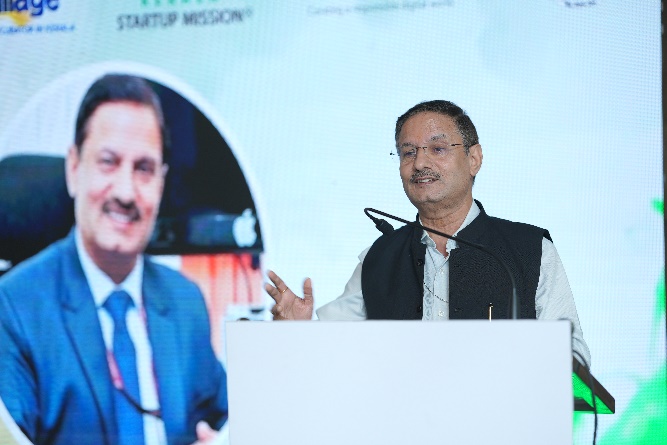 The program shall be implemented by Digital University Kerala with joint funding from Ministry of Electronics & Information Technology (MeitY), Government of India and Government of Kerala and Industry partners, with the total budget outlay of Rs 94.85 Crore, wherein, Carborundum Pvt Limited joined as one of the main industry partners.
- Along with the startup products developed, the technologies and products also developed at research and development centers like India Innovation Centre Graphene (IICG), setup at Makers village, Kochi shall be considered for commercialization.
- ‘India Graphene Engineering and Innovation Centre (I-GEIC)’ shall be set up and the initial operations will start from the recently opened facility of Government of Kerala at Digital Science Park in Trivandrum.
Benefits expected out of the programme
- It shall fill the gap between R&D and commercialization by providing a complete facility to startup and industry
- It will nurture the deep/emerging Graphene technology & innovation ecosystem that can guide, develop, implement, and support SMEs and startups to commercialize developed graphene technologies for scale adoption.
- Creation of a commercialization eco-system for graphene as an emerging technology would help India take a pole position in the world’s new material market.
- The secretary also announced the progress and contributions of Maker Village, to the development of hardware startups in the country, and assured MeitY’s support for the creation of a complete ecosystem for Electronics Product Testing.
- Outcomes of other MeitY funded Centre of Excellence on IIOT Sensors were appreciated and India Innovation Centre for Graphene that complements the solutions from materials, sensors to system integration that electronic product development.