
BLACK CORALS NEAR AUSTRALIA
GS PAPER 1: Water bodies
Important for
Prelims Exam: About Coral Reefs
Mains Exam: Measures to Protect Coral Reefs
Why in News?
Discovered five new species of black corals living as deep as 2,500 feet (760 metres) below the surface in the Great Barrier Reef and Coral Sea off the coast of Australia.
Key Points
- Black corals can be found growing both in shallow waters and down to depths of over 26,000 feet (8,000 metres), and some individual corals can live for over 4,000 years.
- Unlike their colourful, shallow water cousins that rely on the sun and photosynthesis for energy, black corals are filter feeders and eat tiny zooplankton that are abundant in deep waters.
- Among the many interesting specimens were five new species – including one that was found growing on the shell of a nautilus more than 2,500 feet (760 metres) below the ocean’s surface.
What are corals?
Coral reef ecosystems are intricate and diverse collections of species that interact with each other and the physical environment. Coral is a class of colonial animal that is related to hydroids, jellyfish, and sea anemones.
Stony corals, a type of coral characterized by their hard skeleton, are the bedrock of the reef. Stony coral colonies are composed of hundreds of thousands of individual living polyps. Polyps are capable of drawing dissolved calcium from seawater, and solidifying it into a hard mineral (calcium carbonate) structure that serves as their skeletal support. When you look at a coral colony, only the thin layer on its surface is live coral; the mass beneath is the calcium carbonate skeleton that may be decades old.
The slow growth of polyps and expansion of the hard skeletal structures build up the permanent coral reef structure over time.
Polyps of reef-building corals contain microscopic algae called zooxanthellae, which exist with the animal in a symbiotic relationship. The coral polyps (animals) provide the algae (plants) a home, and in exchange the algae provide the polyps with food they generate through photosynthesis. Because photosynthesis requires sunlight, most reef-building corals live in clear, shallow waters that are penetrated by sunlight. The algae also give a coral its color; coral polyps are actually transparent, so the color of the algae inside the polyps show through.
Coral reefs provide habitat for a large variety of marine life, including various sponges, oysters, clams, crabs, sea stars, sea urchins, and many species of fish. Coral reefs are also linked ecologically to nearby seagrass, mangrove, and mudflat communities. One of the reasons that coral reefs are so highly valued is because they serve as a center of activity for marine life.
Not all corals on the reef are stony corals.
- Hydrocorals, or fire coral, are reef-building hydroids that have a hard calcareous exoskeleton and stinging cells that can cause a burning sensation when touched.
- Octocorals, or ‘soft’ corals, include sea fans and sea whips, which grow more like fleshy plants and do not form calcium carbonate skeletal structures.
- Antipatharians, or black corals, are another type of branching ‘soft’ coral.
Conditions for Corals
- Corals can be found throughout the world’s oceans, in both shallow and deep water.
- However, the reef-building corals that rely on a symbiotic relationship with algae need shallow, clear water allowing light penetration for photosynthesis.
- Stony corals also require tropical or sub-tropical temperatures, which exist in a band 30 degrees north to 30 degrees south of the equator.
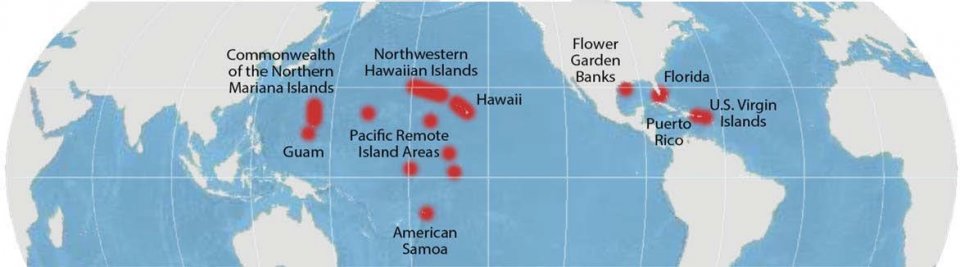
Corals Reefs in India

Types of coral reefs
1. Fringing reefs
Fringing reefs evolve and develop near the continent and remain close to the coastline. These reefs are separated from the coastline by small, shallow lagoons. They are the most commonly found reefs in the world.
2. Barrier reefs
Barrier reefs are found offshore on the continental shelf. They usually run parallel to the coastline at some distance. A deep and wide lagoon is located between the coastline and the barrier reef.
3. Atolls
Atolls are formed on mid-oceanic ridges. They are shaped circularly or elliptically and are surrounded by seas on all four sides and have shallow waters in the center called a lagoon.
Laws protecting the coral reefs of India
The Ministry of Environment, Forest and Climate Change makes and ensures the guidelines and laws protecting coral reefs are followed properly. The State Wildlife department takes care of the corals if the coral reef region comes under a protected area.
All marine resources are protected under the Coastal Regulation Zone (CRZ) of 1991. It provides protection to all coral reefs under the CRZ1 category of the law. The specific Section 7 (2) of the CRZ states that no hotels or resorts are to be made on coral reefs. The mining and quarrying of coral reefs are banned in some states, except for scientific purposes.
Tea industry in crisis
GS PAPER 3: Major crops and cropping pattern in different parts of the country
Important for
Prelims Exam: Data About Tea Industry
Mains Exam: Significance of Tea Industry
Why in News?
During the annual general meeting of the Indian Tea Association (ITA) in Kolkata, the Tea Board of India said it had sought a special financial package of ₹1,000 crore from the Centre for the tea Industry over five years.
Why is it important to save Darjeeling Tea?
- Darjeeling Tea, called the ‘Champagne of Teas’, was the first Indian product to get the GI (Geographical Identification) tag in 2004 for its distinctive aroma and flavour.
- About 87 gardens in Darjeeling which employ about 55,000 workers produce approximately 7 million kg of tea, most of which is exported.
- According to insiders, over the past few months a lot of gardens in the hills have changed hands because the owners were reeling under higher costs of production and other issues.
- ITA Chairperson said the financial problems of the Darjeeling Tea industry were acute, and the Government’s help was needed.
What is the threat from Nepal’s gardens?
- Parliamentary Standing Committee “unhampered and easy influx of substandard tea from neighbouring countries, especially Nepal” is jeopardising the tea industry of India.
- The document pointed out that inferior quality tea from Nepal was being imported, and then sold and re-exported as premium Darjeeling Tea.
- Under the Revised Treaty of Trade between the Governments of India and Nepal in October 2009, both parties had agreed to exempt from basic customs duty, as well as from quantitative restrictions, the import of mutually agreed primary products.
- Data from the Tea Association of India show that the total tea imported from Nepal in 2020-21 was 10.74 million kg during the same period, the total tea import of India was pegged at 27.75 million kg.
- Industry experts said Nepal, which shares similar climatic conditions and terrain, produces tea at a lower price because of less input costs, particularly labour, and fewer quality checks.
Other points of stress
- The influx of tea from Nepal picked up pace in 2017, when the 107- day agitation and shutdown in the Darjeeling hills brought tea production to a halt.
- From June to September 2017, tea bushes in Darjeeling lay unattended during the agitation called by the GorkhaJanmuktiMorcha over demand of a separate State of Gorkhaland.
- In 2017, the production of Darjeeling Tea hit a low of 3.21 million kg. Since a substantial market of Darjeeling Tea is exported, exporters switched to cheaper varieties of tea, including the imported variety from Nepal.
Is climate change impacting production?
- Tea production in Darjeeling which used to be around 10-12 million kg a decade back now stands at 6.87 mkg (2021).
- The decline in production is due to multiple factors, which include climate change, declining yields and high absenteeism among workers.
- Because of the hilly terrain of Darjeeling there is no land left for expansion of tea gardens.
- The tea bushes are older than other parts of the country.
- Uprooting and planting them is both time and cost intensive.
- Industry experts point out that an average tea garden in Darjeeling is about 150 hectares whereas those in the foothills vary from 400 to 500 hectares.
- The average yield per hectare of Darjeeling Tea, according to ITA, is about 350 kg at present which was about 542 kg in 2000.
- The yield per hectare in the foothills, particularly the Dooars region, is about four times higher than the Darjeeling tea gardens.
- Planters have also been complaining about the stagnant prices of auction of Darjeeling Tea, which in 2021 was on average pegged at ₹365.45 per kg.
- According to the ITA, prices of Darjeeling Tea in the last six years have grown at a CAGR (cumulative annual growth rate) of only 1.7% against an increasing cost of input between 10% and 12% CAGR.
- In November 2021, the Tea Board of India issued a notification to restrict the import and distribution of cheap quality tea.
- It asked those who were packaging Darjeeling Tea to indicate on the package if the tea was blended with imported tea, and also give the source of origin of the tea.
- Packeteers have brought down their purchase of Darjeeling Tea after the notification impacted prices.
- Some global factors like the decline in demand from European markets in the wake of the Russia-Ukraine war have compounded the problem.
Way forward
- Planters in Darjeeling say unless the Government restricts the influx of tea from Nepal, Darjeeling Tea cannot be saved.
- The Parliament committee suggested that Small Tea Growers (STGs) should also be recognised as GI-registered producers on a par with the 87 tea estates which produce Darjeeling Tea to ensure better price premium.
- Industry experts called for raising the domestic consumption of tea in India, particularly when exports are not picking up.
- The per capita tea consumption in the country remains at 850 grams and is less than neighbouring countries.
Bluebugging
GS Paper: 3- Science and technology
Important for
Prelims exam: Bluebugging
Why in News?
Cybersecurity experts note that apps that let users connect smartphones or laptops to wireless earplugs can record conversations, and are vulnerable to hacks. Through a process called bluebugging, a hacker can gain unauthorised access to these apps and devices and control them as per their wish.
What is Bluebugging?
- It is a form of hacking that lets attackers access a device through its discoverable Bluetooth connection. Once a device or phone is bluebugged, a hacker can listen to the calls, read and send messages and steal and modify contacts.
- Initially, it started out as a threat for laptops with Bluetooth capability. Later hackers used the technique to target mobile phones and other devices.
- The bug exploite a loophole in Bluetooth protocol, enabling it to download phone books and call lists from the attacked user’s phone.
How does bluebugging hack devices?
- Bluebugging attacks work by exploiting Bluetooth-enabled devices. The device’s Bluetooth must be in discoverable mode, which is the default setting on most devices. The hacker then tries to pair with the device via Bluetooth. Once a connection is established, hackers can use brute force attacks to bypass authentication.
- They can install malware in the compromised device to gain unauthorised access to it.
- Bluebugging can happen whenever a Bluetooth enabled device is within a 10-metre radius of the hacker.
- Hackers can also use booster antennas to widen the attack range.
How can one prevent bluebugging ?
- Turning off Bluetooth and disconnecting paired Bluetooth devices when not in use.
- Update the device’s system software to the latest version.
- Limited use of public Wi-Fi and VPN.
- Modern anti-virus softwares can also help thwart bluebugging.
- The new-age antivirus softwares are helping users to detect strange and spam-like content by filtering, blocking and consistently reminding people to be alert.
Which devices are most susceptible to such attacks?
- Smartphones are more vulnerable to this type of hacking as most of the users leave their Bluetooth on in public places, where hackers may be lurking.
- Once hacked, the attacker can make and listen to calls, read and send messages, and modify or steal your contacts.
- Any Bluetooth-enabled device can be bluebugged.
- Wireless earbuds are susceptible to such hacks.
- Apps that enable users to connect to their TWS (True Wireless Stereo) devices or earbuds can record conversations.
Himalayan yak gets FSSAI tag
GS Paper: 3- Conservation
Important for
Prelims exam: Himalayan yak
Mains exam: Decline in population of Himalayan yak
Why in News?
The Himalayan yak has been accepted as a food animal by the scientific panel of Food Safety and Standard Authority of India (FSSAI). The categorisation is expected to help check the decline in the population of the high-altitude bovine animal by making it a part of the conventional milk and meat industry.
About Himalayan yak
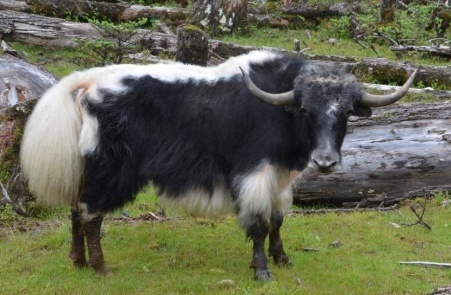
- The domestic yak (Bos grunniens), also known as the Tartary ox, grunting ox or hairy cattle, is a species of long-haired domesticated cattle found throughout the Himalayan region.
- The Bovini tribe, which also includes bison, buffaloes, and cattle, is home to the yak. It can withstand temperatures as low as -40 °C.
- They have long hair that hangs off their sides like a curtain and occasionally touches the ground because they are adapted to living at high altitudes.
- People in the Himalayas place a high importance on yaks. The originator of Tibetan Buddhism, Guru Rinpoche, is credited for domesticating the first yaks, according to Tibetan legend.
- They are also referred to be the pastoral nomads’ lifeline at the high altitudes of the Indian Himalayan region.
Importance
- “The yak plays a multidimensional socio-cultural-economic role for the pastoral nomads who rear it mainly for earning their nutritional and livelihood security due to the lack of other agricultural activity in the higher reaches of the Himalayan region.
- Yak milk is highly nutritious, rich in fat, contains essential minerals and has medicinal values. According to the nutritional analysis, yak milk contains 78-82% water, 7.5-8.5% fat, 4.9-5.3% protein, 4.5-5.0% lactose and 12.3-13.4% solids-not-fat.
- The products which are traditionally produced from yak milk are churkum, churpi, ghee and paneer.
- Mostly consumed locally, yak meat is known to be lean. The meat contains 74.8% moisture, 21.7% protein, 1.5% crude fat and 1.2% ash.
Decline in population is a concern
- According to the data provided by the National Research Centre on Yak (NRC-Y), Yaks are traditionally reared under a transhumance system which is primitive, unorganised and full of hardship. But the yak population in the country has been decreasing at an alarming rate.
- According to a census carried out in 2019, India has some 58,000 yaks – a drop of about 25% from the last livestock census conducted in 2012.
- The drastic decline in yak population could be attributed to less remuneration from the bovid, discouraging the younger generations from continuing with nomadic yak rearing.
- It is mainly because yak milk and meat are not a part of the conventional dairy and meat industry, their sale is limited to local consumers.
- The wild yak is currently listed as Vulnerable on the IUCN Red List.
Commercialisation of yak
- NRC-Y scientists believe the commercialisation of yak milk and meat products will lead to entrepreneurship development. But for that the yak has to be included as a food producing (milk and meat) animal in the Food Safety and Standards Regulation, 2011.
- “The FSSAI’s recognition will help farmers rear the yak economically and open up several vistas of economic benefits for both farmers and food processors.
PSLV-C54 mission
GS Paper: 3- Science and technology
Important for
Prelims exam: PSLV-C54 mission, Earth Observation Satellite (EOS)-06
Mains exam: India-Bhutan Satellite, PSLV-C54 mission
Why in News?
The Indian Space Research Organisation (ISRO) successfully placed nine satellites, including an Earth Observation Satellite (EOS-06) in multiple orbits with the help of the space agency’s Polar Satellite Launch Vehicle (PSLV-C54).
About the mission

- This is the 56th flight of the Polar Satellite Launch Vehicle (PSLV) and the 24th flight of the PSLV-XL version with 6 PSOM-Xls.
- The Polar Satellite Launch Vehicle (PSLV) is an expendable medium-lift launch vehicle designed and operated by the Indian Space Research Organisation (ISRO).
- It was developed to allow India to launch its Indian Remote Sensing (IRS) satellites into sun-synchronous orbits, a service that was, until the advent of the PSLV in 1993, only commercially available from Russia.
- PSLV can also launch small size satellites into Geostationary Transfer Orbit (GTO).
- Chandrayaan-1, India’s first lunar probe, Mars Orbiter Mission (Mangalyaan), and Astrosat, India’s first space observatory are just a few of the notable payloads launched by PSLV.
- The PSLV-XL is an upgraded version of the PSLV that can carry up to 1,800 kg (4,000 lb) to Sun-synchronous orbit using larger strap-on motors (PSOM-XL or S12).
Satellites
- The eight nano satellites include ISRO Nano Satellite-2 for Bhutan (INS-2B), Anand, Astrocast (four satellites), and two Thybolt satellites. Notably, EOS-6 is the Oceansat series’ third-generation satellite.
- EOS-6: Earth Observation Satellite (EOS)-06 is envisaged to observe ocean colour data, sea surface temperature and wind vector data to use in oceanography, climatic and meteorological applications.
- The satellite also supports value added products such as potential fishing zone using chlorophyll, SST and wind speed, and land based geophysical parameters.
Separation of the satellites
- The Primary satellite (EOS-06) was separated in Orbit-1. Subsequently, orbit was changed by using two Orbit Change Thrusters (OCTs) introduced in the Propulsion Bay Ring of the PSLV-C54 Vehicle.
- Later, all the seven commercial satellites from (NewSpace India Limited) NSIL were deployed successfully.
Astrocast
- Astrocast, a 3U spacecraft is a technology demonstrator satellite for the Internet of Things (IoT) as the payload. There are 4 nos. of Astrocast Satellites in this mission.
- These spacecraft are housed within an ISISpace QuadPack dispenser. The dispenser protects the satellite from contamination.
Anand
- The Anand Nano satellite is technology demonstrator to demonstrate the capabilities and commercial applications of miniaturized earth-observation camera for earth observation using a microsatellite in Low Earth Orbit.
- This is a three-axis stabilized satellite consisting of a satbus, accommodating all subsystems like telemetry, tele-command, Electrical Power system, Attitude Determination and Control System (ADCS), on-board computers etc, and a payload unit.
Thybolt
- The Thybolt is a 0.5U spacecraft bus that includes a communication payload to enable rapid technology demonstration and constellation development for multiple users.
- It also demonstrates Store-and-Forward functionality for authorized users in the amateur frequency band.
- The satellites shall be deployed by using Dhruva Space Orbital Deployer to perform the specific mission operations for a minimum lifetime of 1 year.
India-Bhutan Satellite
- ISRO Nano Satellite-2 for Bhutan (INS-2B) spacecraft is configured with INS-2 Bus. INS-2B will have two payloads namely NanoMx and APRS-Digipeater.
- NanoMx is a multispectral optical imaging payload developed by Space Applications Centre (SAC). APRS-Digipeater payload is jointly developed by DITTBhutan and URSC.
Future missions of ISRO
- ISRO is also planning to have its mission to the sun with its satellite Aditya-L1, a coronagraphy spacecraft to study the solar atmosphere, with a PSLV rocket.
- The space agency will also launch a navigation satellite for the country’s NavIC constellation.
- “ISRO has planned to launch four NavIC satellites and the first one will go up in 2023.”